Trace Minerals in Equine Blood Health
Trace minerals are nutrients required in small amounts that support normal enzymatic function and metabolic balance in horses. Because forage mineral levels can vary, programs often focus on consistency—especially during training, stress, and transport.
Small Nutrients with Essential Roles
Trace minerals are required in small amounts but play critical roles in enzymatic reactions, blood formation, and metabolic regulation.
Role of Trace Minerals
In horses, trace minerals help support:
-
• Red blood cell maturation
-
• Oxygen utilization
-
• SEnzyme and hormone function
-
• Nutrient absorption and utilization
Examples include copper, zinc, cobalt, and others, depending on formulation.
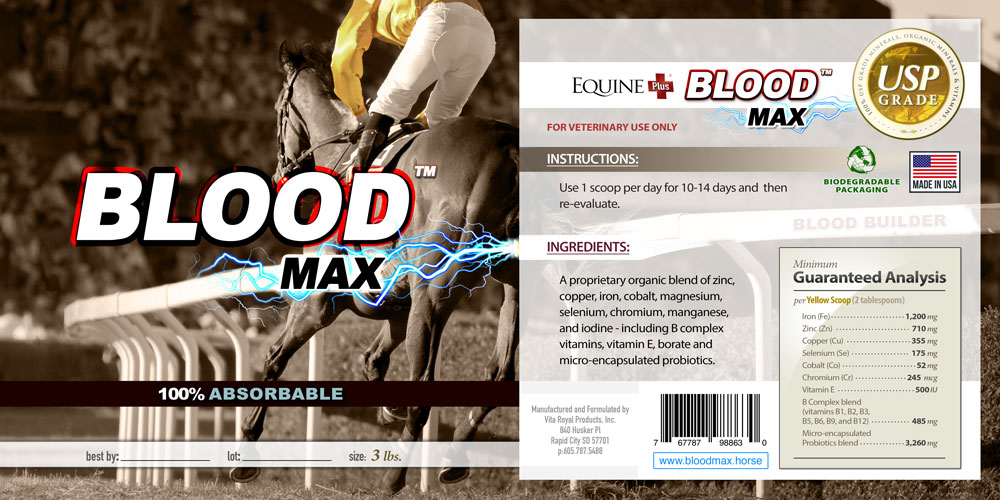
Trace Minerals in BLOOD MAX™
BLOOD MAX™ includes amino acid chelated trace minerals as part of a controlled and intentional formulation, designed to support nutritional adequacy without exceeding responsible levels.
Competition Considerations
Certain trace minerals are monitored or regulated by equine governing bodies. While BLOOD MAX™ is formulated as a nutritional supplement, regulatory thresholds vary by jurisdiction.
It is the responsibility of the trainer or owner to ensure compliance with applicable competition rules.
Trace Minerals for Horses
FAQ
Chelated vs. Inorganic Minerals
Answers to some common questions
Chelated trace minerals are minerals that are chemically bound to organic molecules, such as amino acids, to help improve stability and absorption in the digestive system.
Inorganic trace minerals are minerals supplied in salt or oxide forms that are not bound to organic compounds and rely on standard digestive processes for absorption.
The primary difference is bioavailability. Chelated trace minerals are designed to remain more stable during digestion, while inorganic minerals may compete with other nutrients for absorption.
Chelated trace minerals are commonly used to support more consistent nutrient uptake, especially in horses with higher nutritional demands or variable feed intake.
Performance horses may benefit from chelated trace minerals due to their potential for improved absorption under conditions of increased metabolic activity.
Some equine nutrition programs use a combination of chelated and inorganic trace minerals to balance absorption efficiency with overall mineral intake.
Contact Us
- phone: +1 605 787 5488